Thursday, October 13, 2016

Friday, September 9, 2016
Saturday, April 30, 2016
Vikings: A Great Show with a Good Christian Character
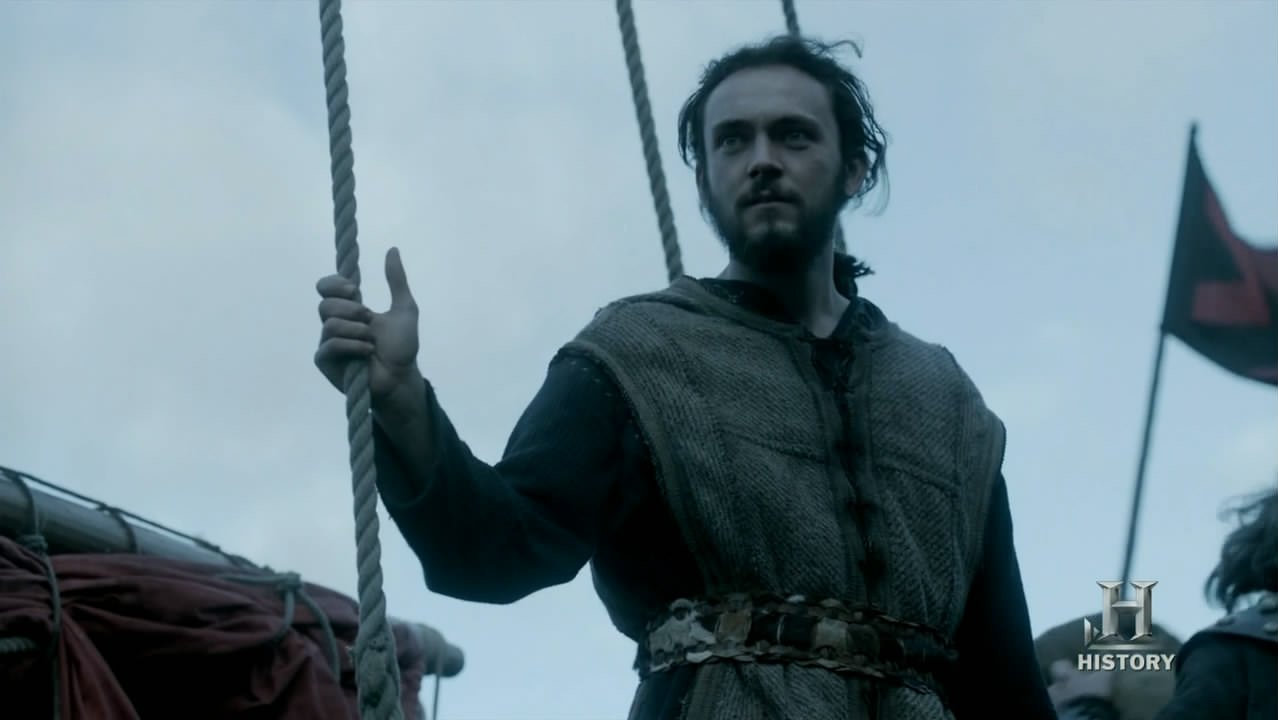
Through my friend Beth, I discovered the History channel series Vikings. History’s always been a passion of mine and after doing a little more digging into the production of the show I found my interest piqued and gave it a go. The result, I’ve come away a full blown fan of the series caught up all the way to the end of Season 4. Now if you haven’t seen it yet, the series follows the exploits of the legendary Viking king Ragnar Lothbrok. While some bits are fictionalized for the sake of the plot, the show is more or less authentic in its portrayal of the time period. But I’m not here to discuss the series as a whole but rather one of my favorite, if not my favorite part of the whole show - the character of Athelstan.
(Spoilers for Vikings)
Introduced in the second episode of Season 1 “Wrath of the Northmen”, Athelstan is a Christian monk from the monastery of Lindisfarne in Northumbria, England. The Vikings, led by Ragnar, raid the monastery and kill or take prisoners to be sold into slavery. Athelstan is one such taken by the Vikings back to their home of Kattegat after Ragnar sees that Athelstan can speak the Norse language and can be useful to him in his ambitions. Ragnar keeps Athelstan as his slave as his part of the spoils and that turns out to be a smart move on Ragnar’s part as he learns much of England from Athelstan about their language, politics, and culture. What quickly becomes apparent in Ragnar’s growing fascination and fondness towards the Christian. Ragnar, even though he has no reason to, treats Athelstan very well and more or less declares him a free man as early as the third episode. He also never tries to force Athelstan to abandon his faith and allows him to continue his Christian faith. By Season 2 a deep friendship between the two men has formed and as Ragnar rises to become King, Athelstan rises with him attaining a position of Stivardur (steward) in Ragnar’s house, or at least a position similar to that. This is all well and good but what grabbed me about Athelstan was the story his character was given, and how it spoke to me as a Christian.
In his initial introduction, it’s clear that Athelstan is devout in his faith. After his abduction from Lindisfarne, he begins to show signs of doubt in God. He wonders why God has allowed him to live among heathens (His words not mine) and expresses anger at him. One of the most telling moments in the show that captures where Athelstan’s faith in God is at that moment comes in episode 6 “Burial of the Dead”. In the previous episode, Earl Haraldsson attacked Ragnar’s house and burned it to the ground. When Ragnar’s family go through the ruins to see what they can salvage, Athelstan comes across his Bible which disintegrates in his hands, symbolizing how his faith in God has begun to crumble. This moment is the big turning point in Athelstan’s story as now he finds himself torn between his Christian faith and the Viking culture he also finds himself increasingly fascinated by.
By Season 2, not only has Athelstan become a Viking, he also seems to have renounced his faith in God. After one raid Floki, a devoted follower of the Norse gods presents Athelstan with a Bible as a taunt but Athelstan responds with, “Odin is my god.” Floki naturally doesn’t believe him. After another raid on in England, this time, the monastery of Winchester in Wessex, Athelstan discovers Bible pages that the monks were working on and out of nostalgia begins to finish it. A monk that was hiding misinterprets his actions and tries to stop him from destroying the pages and in self-defense Athelstan kills him. After seeing the result of his actions, it’s clear that Athelstan is left traumatized by this and regrets his actions. After the raid, Ragnar has to return to Kattegat to reclaim it from Jarl Borg, but Athelstan decides to remain in Wessex to assist the Vikings remaining there. The English attack not long after Ragnar has departed, kill many of the Vikings, and take Athelstan prisoner. Athelstan is then sentenced to death for apostasy but is ultimately spared and pardoned by Egbert, the King of Wessex. During his time in Wessex, Athelstan begins to experience a crisis of faith as he finds he loves both Christ and Odin. In one scene Athelstan remarks the similarities between Christ and Odin as both have died and been reborn. Throughout the remainder of Season 2 Athelstan experiences visions all alluding Christ’s crucifixion where either an image of Jesus bleeds or Athelstan bleeds. Like how the burned Bible symbolized his loss of faith, the blood becomes symbolic of his rediscovery of his faith as well as his ultimate fate in the show.
In the Season 3 episode “Born Again” Athelstan experiences his rebirth as a Christian. While he is sleeping he notices a beam of white light through a door. Athelstan investigates the light and struck with an even brighter beam that physically throws him to the ground. When Athelstan regains his senses he interprets this as God speaking to him and Athelstan has become a born again Christian, much to Ragnar’s delight. But just as soon as Athelstan has found his faith again, later that night Floki breaks into his home and kills him as he begins to pray and given how Floki had it in for Athelstan from the start – and some ancillary details concerning Ragnar I will address - this was likely the only way his story could have ended.
The relationship between Ragnar and Athelstan was a big crux of the story. Ragnar always approached Athelstan’s Christianity with fascination and interest in learning. Whether it was to serve his own ends or curiosity’s sake, Ragnar was never dismissive or outright hostile toward it like Floki was. By Season 3 it was clear these two men were brothers in arms despite their different beliefs. One scene I really liked that showed this came in episode 10 of Season 2 “The Lord’s Prayer”, where Athelstan teaches Ragnar the eponymous Lord’s Prayer. In “Born Again” after finding his friend dead, Ragnar out of respect gives Athelstan a Christian burial and says, “You saw yourself as weak, but to me you were fearless because you dared to question.” It shows Ragnar respected Athelstan’s faith whether it was in Odin or God, he only cared that Athelstan was a believer. And given the path that Ragnar finds himself on later in the show, it’s clear that Ragnar didn’t just lose his friend he lost his conscience as well, which speaks volumes about the impact Athelstan had on him.
Overall Athelstan’s story really spoke to me as a Christian, because believe it or not, I’ve actually been where he was. I may not have fully renounced God and starting worshipping Odin, but I’ve had my own crisis of faith and period where I’ve doubted God. In fact, this is something many if not all Christians experience in their lives. How many of us have had that moment where we’ve had doubt in God? If you’re one of my Christian readers, perhaps that’s happened to you as well. At some point, we will have that moment where we doubt, but the real test is what we do after that moment
The Bible makes no illusion that in our walk with God we will experience hardship. Our lives aren’t going to improve because we find God, in some cases our lives may just get harder and when we’re really hit with the moment that tests our faith we inevitably begin to question. The thing is questioning is good, in fact, I don’t think you can be a good Christian without questioning. My dad, who is a pastor, and many other pastors have spoken about how God doesn’t want, for lack of a better term, machines that just blindly follow what they’re told. The crux of being a Christian is that we develop and maintain a relationship with God, a relationship that we can’t have if we don’t completely believe in him. This is why questioning one’s faith is important for being a Christian. Another friend of mine Deantay put it best where it concerns Athelstan, but I find it very relevant nonetheless, “He challenges and questions faith to find out what he believes in. Not just swallow everything he is told.” When we find out what we truly believe, we are able to have a real relationship with God. This is why I found Athelstan’s story so compelling to the point that he became my favorite character on the show. Athelstan having his faith shaken, losing it, and then finding it again, these were all things that I experienced to one degree or another and alongside Daredevil, this is one of the most positive portrayals of a Christian character on mainstream television in recent memory. So this is a show I have no reservation about recommending to my fellow Christians. This is a well-made piece of historical fiction that doesn’t just have a Christian that is portrayed positively, but is also relatable to boot.
Thursday, April 7, 2016
Star Wars: Rogue One Trailer Leaves Me Feeling Cold
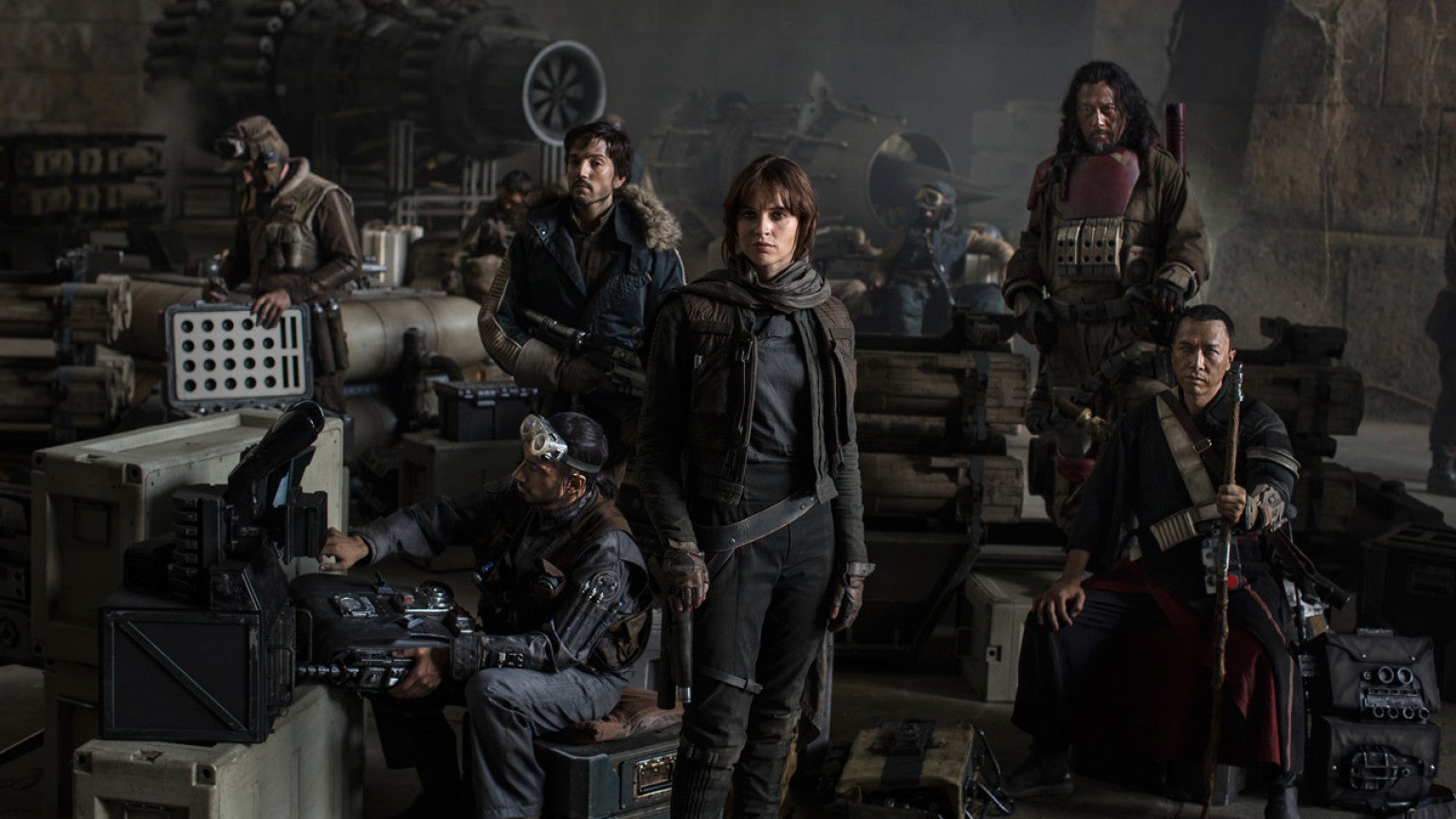
It gives me no pleasure to say this about a Star Wars film, but I am not looking forward to Star Wars: Rogue One. DO NOT take that as me expecting this to be bad. Are we clear? I AM NOT saying this is going to be a bad movie, I AM NOT saying you shouldn't go see it. What I AM saying is that after seeing the trailer this was all I felt.

I don't know if it's me having been spoiled by the Force Awakens and Rebels, but I'm starting to feel a sense of Star Wars fatigue if I'm being honest. Now I do sincerely hope that this film is successful and since it's coming out in December, maybe my feeling toward it will change. But I'm starting to reach a point where I want to see new kinds of science-fiction properties are being made, even if they are inspired by Star Wars. That's what I hope you guys take from this; I don't Star Wars to go away, I want to see ideas that were inspired by it.
Wednesday, March 30, 2016
Daredevil and the Relationship Media Has With Christianity

Being a pastor's son it's safe to say that I've been in the church since before I was born. When you hear stories about preacher kids there tends to be one of two stories; they're either super devout or super rebellious. While I myself am a true believer *wink wink* in the lord Jesus Christ and his word, ask anyone who knows me and they'll likely tell you that I'm pretty chill, down to Earth, and not at all the stereotypical Christian out to convert every stranger he meets. Now while my passions lie with comic books, video games, heavy metal, and anime, my first loyalty is first and foremost to the one who put himself to death to redeem me. Being a Christian isn't just going to church for an hour on Sunday, or regular readings of the Bible followed by prayer every day. Those are part of it, but there's more to it. Being a Christian is coming to terms with the fact that I am fundamentally a sinful person and my only hope is to surrender myself to Christ. Okay, I've accepted Jesus as my savior, everything's coming up roses, right? Wrong, that was just the first step. Till the day I die, my life needs to emulate the example Jesus provides in the Bible and don't think it's easy trying to live my life like he who was without sin. Some days it seems downright impossible, but the whole point is that by emulating Jesus I am able to become the best version of myself and live a life transformed where even though I still make mistakes I'm no longer a slave to sin.
Now, what does any of that have to do with Daredevil? Trust me I'm going somewhere with this. In this day and age, it has more or less become in vogue to either ridicule or outright vilify Christianity and by extension Christians. We live a post-modern world where everything must be deconstructed and cynicism is the order of the day. We live in a world where the secularism of the Enlightenment has become the new religion. Now don't take this as me bemoaning Christians losing their purchase on society, because to be frank we're not completely blameless given that the church became complacent and sanctimonious. Instead of being a hospital to heal the spiritually sick, we became a luxury cruise line for the self-righteous. But none of this changes with how modern pop culture has chosen to represent us as either hopelessly naive, foolish, bigoted, detached or in certain cases evil. One of the most egregious examples of this is Ned Flanders from "The Simpsons" whose Christianity was originally just supposed to be another character trait to make him annoy Homer because of how good a neighbor he was and therefore, highlight Homer's own shortcomings as a human being. But as the show went on that became Ned's only character trait and rather serve as a contrast to Homer, he became the butt of a joke, "Christians sure are silly". So when Marvel and Netflix produced the excellent Daredevil tv series with full intent on including the faith of Matt Murdock as a central character trait well I was certainly glad to see it. Even Charlie Cox, the actor who plays Daredevil, grew up Catholic and demonstrating an understanding of what makes the character tick. And so far the show has handled Matt Murdock's Catholicism rather well, the first episode has him in a confessional, he seeks the advice of his priest when presented with a moral dilemma, and in another from the recently released second season, he prays to God when Elektra's life hangs in the balance.
Now Matt's Catholicism isn't just something that was added to the character for this show, it's been a part of his character since Frank Miller took over the book back in the 80's. Frank Miller - who also grew up Irish Catholic - incorporated that as part of Matt because according to him, "Only a Catholic could be both an attorney and a vigilante." No more was Matt's faith more put on display than in the excellent "Born Again" arc where the Kingpin systematically tears Matt's life apart after learning the blind lawyer from Hell's Kitchen and the vigilante that has been a perpetual thorn in his side are one in the same. At his lowest point having lost his home, his career, reputation, and even costume - which for the majority of the story he goes without - Matt finds himself in a Catholic shelter where he is nursed back to health. The story is ripe with religious symbolism that includes a splash page where Matt assumes the position of the crucifixion, a sequence where he walks through Hell's Kitchen in a manner similar to Christ's walk to Golgotha, and even an allusion to the Pieta where Matt takes the role of Jesus and his absent mother the Virgin Mary. Kevin Smith's run, Guardian Devil, also included heavy use of religious themes, which also came from Smith's own experiences being raised Catholic. Smith's run shows how Matt's faith simultaneously both a source of inner strength but also a weakness that can be exploited the wicked, and to explain any further, would spoil this story. (In fact, read both "Born Again" and "Guardian Devil")
While I wish that Matt's faith was more deeply explored I understand that concessions need to be made to keep the plot moving. Even Matt's job as a lawyer has to take a backseat at certain points to his nighttime vigilantism. So to include it at all without falling back on how pop culture tends to treat Christianity is something I can certainly get behind. And given that it's a show there's always the chance an episode can be devoted to examining Matt's faith a Christian in the future, hopefully showing the positive aspects. What I like about Daredevil is that it can hopefully open the door for Christianity to be reexamined with perhaps more sympathetic eyes. I'm not calling for media to go for converting viewers. What I'm hoping for is more nuanced portrayals of Christians that not only portray the personal struggle one goes through as a follower of Christ but also how through that struggle we are able to draw strength and become better people for it. More than being an excellent adaptation of an underrated comic book, Daredevil shows that pop culture still has room for Christianity without it being turned into a farce or overly criticized.
Tuesday, March 29, 2016
Review of Justice League vs Teen Titans
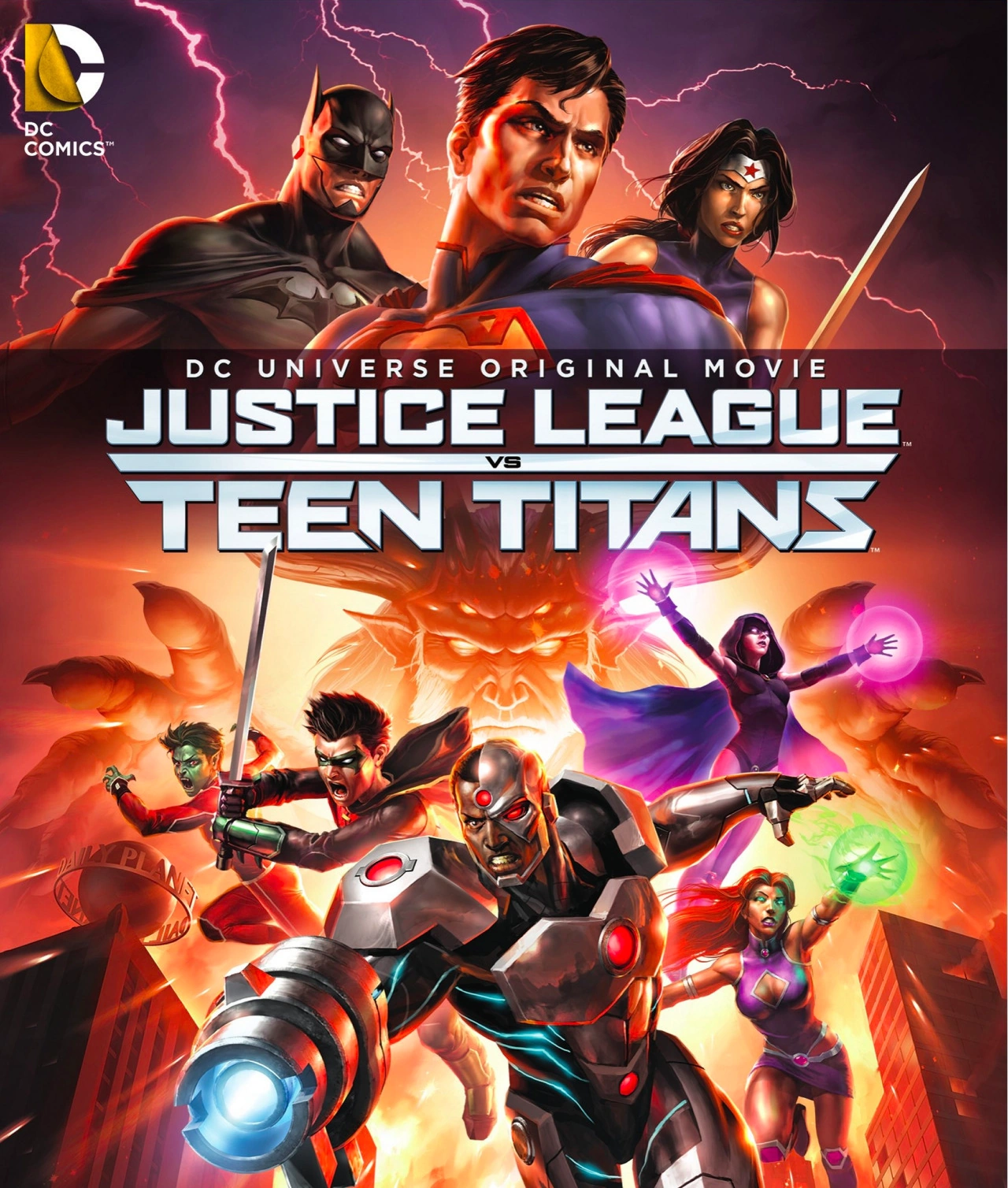
This isn't a bad movie. Just want to make that clear. Also I did not hate it either. I just hated parts of it. But the overall package was passable. But that's kind of become the trend with the latest straight-to-DVD DC animated films based off the New 52 universe, going all the way back to Justice League: War. While none of them have been outright bad, they've either been unexceptional or flawed enough to be passable, and Justice League vs Teen Titans is no exception to that trend.
Now the basic plot should be familiar to any DC fan because it's an adaptation of one of the most seminal plots from the Teen Titans comics during Marv Wolfman and George Perez's tenure. Even if you didn't read the comics, you likely saw it in the Teen Titans animated series. I know I did. Raven's demon father, Trigon, is coming to the Earth to bring eternal darkness and Hell on Earth - as demons are wont to do - and to get here he needs Raven. Now what this move does is that it introduces a clever twist on this familiar story by having Trigon possess the Justice League and set them against the Titans. The Titan roster in this version features classic characters like Starfire, Beast Boy, and Raven but also throws in Blue Beetle and Damian Wayne. And there is where this movie's biggest Achilles Heel lies, Damian.
If you could stamp the word "Hate" on each individual cell in my body, it would come just a little bit shy of how much I despise Damian Wayne. This is his fourth appearance counting "Son of Batman", "Batman vs Robin", and "Batman: Bad Blood", and being a likable character still seems to be his proverbial white whale. Now to the credit of the writers, Damian has shown some genuine growth as he's graduated past "Kill the bad guy" being his first instinct to a given situation, but he's still kept that superiority complex and open hostility. Now in his defense, given that he was raised originally to be R'as Al Ghul's heir it's to be expected that initially he would act like that and that was fine at first. When Damian's inner conflict with what R'as taught him and what Bruce is trying to teach him was front and center like in "Son of Batman" and "Batman vs Robin". In fact with those two movies he had a genuine character arc, but by "Batman: Bad Blood" he still had the aforementioned superiority complex and open hostility. I'm not saying that I was expecting him to act friendly and crack jokes like Dick Grayson, but the problem with the type of character Damian is that he doesn't make for a likable protagonist unless he can show more than fleeting hints of humanity. It's great he doesn't resort to kill the bad guy first but I've long filled the tank on Damian proving how he's better than everyone, even Batman his own father.
You're probably wondering what I mean by that.
The movie opens with the Justice League fighting the Legion of Doom and beating them. But Weather Wizard flees, gets possessed by Trigon, wreaks havoc, and the Justice League try to stop him. Now Batman has Damian on crowd control, much to Damian's displeasure.So Damian hijacks the Batwing to use as a giant missile against the demon possessed Weather Wizard and he's probably lucky it doesn't kill Weather Wizard. Batman - much like me - gets fed up with Damian acting uppity and decides to put him in the Teen Titans in hopes that Damian can learn to follow orders and work on a team. Now I get why, the movie needed to show why Damian is being put on the Titans but this ends up giving the wrong impression that Damian is the protagonist when in reality this isn't his story.
Remember how I said this was an adaptation of the Trigon arc from Teen Titans? Now who do you suppose the protagonist of that story should be. If the answer was Raven, congrats you won. Luckily the writers picked up on this and devote enough the story that Raven is a protagonist, but she's sharing that with Damian. It might seem like a nitpick but this story would have been stronger if it had put Raven front and center. With Raven as the main character, the story could focus on her own inner turmoil and journey finding real friends and a home. How that could have been accomplished is keep the opening with the Legion of Doom more or less the same, with Damian being absent. After the battle's over Raven would introduce herself to the Justice League to tell them about Trigon and she needs their help. At first, they're skeptical, but then Weather Wizard gets possessed vindicating Raven. They put her on the Titans so she can be supervised while they work on dealing with Trigon.
The best part is that even with that change the majority of the movie's plot can remain intact. Even Damian being there with a line alluding to him disobeying Batman being the reason he was put on the team. The part of the plot that includes Damian and Raven bonding can stay as well. In the movie, the catalyst for this is during a training session Damian pushes Blue Beetle's scarab so far that it overrides Jaime's will and hits Damian with a chest cannon that severely burns him and Raven heals him. While healing him she picks up on his past and the two discover a kinship through their respective dark pasts. That scene can still be used in the version I suggested that places Raven as the main character, but I'm still glad that the writers had the good sense to at least split main character status between Raven and Damian, even if the story is weaker for it.
Another thing that I'm counting as a flaw is this one song they used in a montage of the Titans at an amusement park. The song sucked and I muted it the whole way through. Don't ask me the name of the song or the artist because the credits deigned to not speak of either, I checked.
But in all honesty, this wasn't a bad movie, DC has certainly done worse (Superman: Brainiac Attacks). One thing I really loved was Starfire being the leader of the Titans in this version along with being a big sister type figure which fits the character very naturally. Raven and Damian's budding friendship felt more or less organic and pitting the Titans against the demon possessed Justice League was a welcome twist. I also like how the story kept Batman benched for the majority of the story as too often DC treats Batman like their own Chuck Norris. It was also cool how they included Cyborg in the final battle, no doubt as a send up to the classic Titans roster. One weird thing is that they had Beast Boy randomly change into monsters once the Titans got to Hell. One of them resembled the were beast from the TT episode "Beast Within" so you're left to conclude that they're Easter eggs I guess, but I can't recall Beast Boy turning into an imp, a chimera, and griffin (I think that's what they were) in any other media.
Voice acting was inconsistent. There are really good performances from Stuart Allen as Damian, Brandon Soo Hoo as Beast Boy, and Jon Bernthal as Trigon (Although his was brought down somewhat by being filtered in order to sound more demonic) Kari Walhgren's voice for Starfire was too high pitched and didn't communicate the character's maturity properly. Taissa Farmiga, who voices Raven, was sadly the weakest as her performance was very wooden although I'm willing to put that down as lack of experience in voice acting. I get that DC likely wanted to use someone different from Tara Strong (Raven's voice in the TT animated series), but given that Raven is one fo the main protagonists she demands a better performance. Everyone else was just kind of there.
The animation, as is standard for DCs straight to DVD films, was top notch. Fluid movement and exciting action scenes are very much present and accounted for here. Sadly the same can't be said for the animation style, which while not horrible by any means lack any real identity unlike the Bruce Timm DCAU, the Teen Titans animated series, or even some of the straight to DVD films like Batman/Superman: Public Enemies, Batman/Superman: Apocalypse, or the Dark Knight Returns Parts 1& 2 which emulated the art styles of Ed McGuinness, Micheal Turner, and Frank Miller respectively. It's just a little too generic looking to stand out.
So all in all Justice League vs Teen Titans is an okay film that could have been better with a major change. It's good for some light viewing, but outside of being a hardcore DC or Teen Titans fan, I can't see much reason to own it. Causals rent it at most.
Also, why is Nightwing featured in a group shot during the credits when he was only in two scenes, neither of which were fights and not even that long?

Subscribe to:
Comments (Atom)